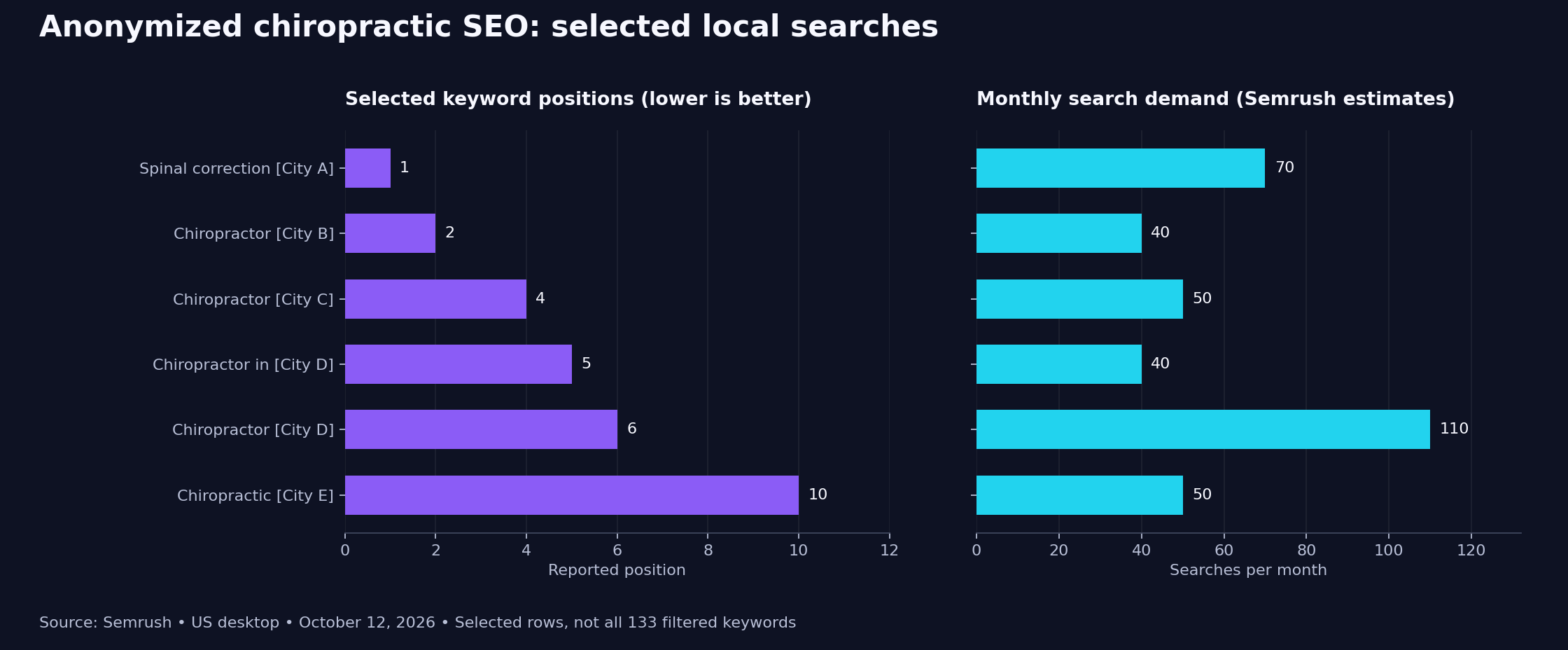
A chiropractic practice’s October 2026 Semrush report shows first-page visibility for several local provider and service searches. The report lists 227 ranking keywords overall, while its non-branded filter contains 133 keywords. Selected terms appear at positions one, two, four, five, six, and ten.
The practice name, domain, and town names have been withheld. This case study presents the report’s search footprint rather than claiming a measured campaign lift.
227
Overall organic ranking keywords
133
Keywords in the non-branded filter
228
Estimated monthly organic visits overall
Local Searches with First-Page Visibility
The selected examples combine provider searches, such as “chiropractor [city],” with a service-specific search. These are examples of discovery terms people can use before knowing a practice’s name. City labels preserve the relationships between queries without revealing the actual markets.
| Anonymized keyword | Position | Monthly search volume |
|---|---|---|
| spinal correction treatment [City A] | 1 | 70 |
| chiropractor [City B] | 2 | 40 |
| chiropractor [City C] | 4 | 50 |
| chiropractor in [City D] | 5 | 40 |
| chiropractor [City D] | 6 | 110 |
| chiropractic [City E] | 10 | 50 |
Volumes apply to the original queries before anonymization. The six examples are a selected subset, not the practice’s complete keyword list or a count of all first-page rankings.
Keyword Positions and Search Demand
Opportunities Beyond Page One
The report also lists relevant-looking terms just outside the first page, including “chiropractic sport injury treatment [City A]” at position 11 with an estimated volume of 40, and “lower back pain treatment [City A]” at position 11 with an estimated volume of 50. These terms warrant reviewing the matching pages and their relevance to the practice’s actual services.
A position alone does not establish an opportunity’s business value. The service must be genuinely offered, the location must be appropriate, and the page must provide accurate information that helps a prospective patient decide what to do next.
What This Illustrates About Local Healthcare SEO
The snapshot shows how a practice can appear for multiple local discovery queries rather than relying only on its own name. A useful strategy connects accurate practice information with service descriptions, appropriate local context, and accessible contact or appointment-request options.
For healthcare websites, clinical descriptions should be reviewed by the practice. Visibility is not evidence of treatment effectiveness, and estimated website traffic is not a count of new patients.
Explore our healthcare SEO approach, local SEO services, and content strategy for related work. Our technical SEO services address website accessibility, indexing, and usability.
Report Scope and Measurement
Source: Semrush Organic Research: Positions, generated October 12, 2026; US desktop dataset. The overall header shows 227 keywords and 228 estimated monthly visits, while the displayed table is filtered to 133 non-branded keywords. These scopes should not be combined or described as 228 non-branded visits.
Keyword rows have individual update dates, so the report generation date is not a simultaneous ranking measurement. Third-party estimates and positions can differ from Search Console, analytics, and local results. The report does not document campaign actions, a before-and-after improvement, verified appointments, or revenue.
Plan a Clearer Local Search Presence
Tell us about your website, services, and actual coverage. We can discuss priorities for useful content, local visibility, and the path from a website visit to an inquiry.
Other Practice-Based Businesses
Patient-driven local search works much the same way for dentists in Las Vegas. Professional practices such as law firms and financial advisors face similar trust questions before a first appointment.